







Today’s teens often try to tackle their homework while fielding nonstop notifications, listening to music, and participating in group chats. Plenty of parents wonder if this is a fight worth having, or if this is just – as some teens say – “how kids study now.”
January 20, 2026 | 27 min
Transcript | Can Teens Really Study While Scrolling?
The Ask Lisa Podcast does not constitute medical advice and is not a substitute for professional mental health advice, diagnosis or treatment. If you have concerns about your child’s well-being, consult a physician or mental health professional.
The following transcript has been automatically generated by an AI system and should be used for informational purposes only. We cannot guarantee the accuracy, completeness, or timeliness of the information provided.
Reena Ninan:
It drives me nuts that they want to listen to music to be able to study or do their homework. Is that a bad thing?
Dr. Lisa Damour:
An interruption that a kid does to themselves where they switch gears and they go look on TikTok, it still disrupts your studying. It is hard for kids to sustain attention these days. They are growing up in this soup of unbelievably interesting things that are right at their fingertips. We also struggle with focus and attention. If we had had this technology as teenagers, we would use it exactly as our kids do it.
Reena Ninan:
Can a parent get a child to change?
Dr. Lisa Damour:
Okay, so this is the big question.
Reena Ninan:
All right. The technology battle never ends. It never ends. But I also have to admit, I think it’s the time of year where it’s cold and you’re just doomscrolling all the time on your phone.
Dr. Lisa Damour:
You can be. You definitely can be. I think especially when teens are in the, I call it the armpit of the school year, January – January, February, that their homework can start to feel tedious and they do not always give it its totally full attention.
Reena Ninan:
So I want to get to this about talking about studying and scrolling is a letter that a parent raised here.
Dear Lisa and Reena, I’m the parent of a ninth grade girl who insists she studies best while multitasking, stopping to look at TikTok, listening to her music, her phone buzzing with group chats. When I question what she’s doing, she points out that her grades are excellent, which they are, but from my perspective, it seems to make her work take longer and her focus slip. I don’t want a micromanager, but I’m worried that this habit is getting in the way of real learning. Is this just how teens study now or can I push her to adapt healthier study habits without turning the whole thing into a nightly battle? Thanks for your help, a concerned parent.
Oh my gosh, so many parents I know struggle with this because first off, there’s a piece of technology in the bedroom.
It’s the music piece that they want to have. But I’m always thinking, Lisa, you need to learn how to study without all these things going on. Am I right about that?
Dr. Lisa Damour:
100%. 100%. So I love this letter because I think it’s something that so many families are dealing with and it’s really hard to argue with or hard to know how to intervene, especially like this kid’s doing well academically, so that that can even make it that much harder. If your kid’s struggling academically, I think people feel like they’ve got more of a foot to stand on, but this is a big issue and this is an important thing that we really want to deal with. Okay. So my question for you, Reena, where do your kids do their homework?
Reena Ninan:
In their room. And I did it too when I was growing up. I needed a space where nobody is talking to me and a quiet zone, right?
Dr. Lisa Damour:
Yep. And it can really work. It can work for kids to do their homework in their room for exactly the reasons you articulate, that sometimes kids just need a place where there’s not a lot going on and it’s quiet. And if it’s working, it’s working. If the kid is focused, the kid’s focused, right? That’s the argument for being in their room is that this is where I can focus. I will tell you, both of my daughters have done high school at the dining room table. The dining room table, I just turn it over. I put a big tablecloth on it and that’s where they do high school. So my older daughter who’s now in college and my younger daughter who’s in ninth grader, like this kid, and it creates I think a little bit of pressure to not be multitasking digitally because an adult could walk by at any minute.
And it also, for kids who feel too alone in their room or too isolated, I find the dining room, if you have one, I mean, we certainly don’t use ours very much. It’s a place where they can feel like they’re not entirely alone, but they’re also not right in the middle of the traffic pattern of family life, at least the way our dining room is configured.
Reena Ninan:
How big of a deal is this? Do you hear about this often of parents talking about this?
Dr. Lisa Damour:
I actually think, I think it’s not a big deal, but I think it’s very common. So relative to other stuff the teenagers struggle with, this is like a frustration, but I think it’s really common. And I think this letter writer is on the right track. Like, the kid’s doing well, but I still don’t feel ready to drop it. She started to talk about the ways in which, is this going to get in the way of her academics? And what we know is that it doesn’t matter who interrupts you, it still disrupts your studying. So if my kid or your kid is working in a focused way and then we burst into their room and start talking, that stops their train of thought. They lose where they were, their likelihood of making mistakes goes up and they are slowed down and getting the work done. An interruption that a kid does to themselves where they switch gears and they go look on TikTok has the exact same impact.
It doesn’t matter where the interruption comes from. So this parents right that this is not ideal.
Reena Ninan:
So are all distractions equally bad? I know some kids just like to de-stress and listen to music. It drives me nuts that they want to listen to music while reading because I’m like, how focused can you be if you’re starting to learn? And the thing in my house is like, oh, I just need a little background music to be able to work. But I’m wondering, is that a bad thing that they’ve got to have that to be able to study or do their homework?
Dr. Lisa Damour:
So this is actually a really cool question and an interesting one because it’s not all bad. And the way we want to think about it, Reena, is like in terms of mental bandwidth, right? That we all have a certain amount of mental bandwidth and music fills up some of it. And what’s interesting is music with lyrics fills up more of it because there’s just more sort of cognitive processing that has to happen. And it is absolutely the case that there are some tasks that kids are doing that don’t require their whole bandwidth. And if their bandwidth is not taken up, they’re actually more likely to interrupt themselves. So like if a kid is reading something … Reading actually should take up most of the bandwidth, but like sometimes kids still get worksheets that just are sort of dopey and they don’t take much energy and listening to music while they’re doing something that they don’t have to really focus on that hard may actually be the thing that lets them get through it.
Reena, you know I knit, like knitting’s like my hobby. I knit all the way through all my meetings in grad school. It was actually how I could pay attention to what was going on is that I needed something to be doing with my hands to fill up just enough bandwidth. We’d have these very long clinical case conferences, so I like made sweater after sweater through these conferences and it was actually how I could focus. And same for my stats classes. I actually was better able to learn the math if my hands were busy with knitting. So I think it’s a bandwidth question that you actually want to talk kids through. And if what they’re doing is hard and challenging, they may not be able to take up bandwidth with music and get the work done, but they may have a point on some easier things.
Reena Ninan:
Because I know music is such a de-stressor for a lot of teens. And so I don’t want to just cut it off because they’ve come back from school, they need a moment, the music helps them calm down. But I do worry that they’ve got so much going on. It’s like having so many tabs open in your head. The letter writer here says that the students’ grades are in fact good. What about that?
Dr. Lisa Damour:
I think that’s a point, right? The kids got a point. I think if I were the parent in these shoes, what I would probably say is that means that the work you’re doing now doesn’t require all of your firepower. That hopefully will not be true for much longer, that you’re going to get to a point where you actually do need your full bandwidth. The other way that we could approach this as a parent is to say, “I hear you, but I bet it’s taking you longer than it needs to because you are interrupting yourself.” So yeah, you’re getting the outcome, you’re getting it right. I think you make the longer argument. And I actually think even if the kid’s grades are good, what we know is that if you’re constantly interrupted no matter how the interruption happens, you make more errors. And so either this kid is having to go back and fix stuff or her grades are not yet showing the impact of these errors.
But I think that’s the argument a parent could make on this as they sort of work their way through it is, look, either this is going to be unsustainable because the work’s going to increase and/or you could actually be watching more TV and getting more sleep if you studied in a focused way and just got it done, you’d make fewer errors, you’d move much faster.
Reena Ninan:
What about the fact that a lot of the work is on the computer for so many students that is the case?
Dr. Lisa Damour:
Right. This is the big thing, right? This is the thing that makes it so hard is it’s like, it’s not like when you and I were growing up and it’s like your textbook and your notebook and there’s nothing … If somebody called, your parents would answer and say she’s studying, she’ll call you back, right? I mean, it’s not like that anymore. I think there’s a couple things that can happen. One is they probably don’t need their phones to be doing their homework. So I would get the phone out of the picture if you can, though I want to come back to it because I do have an idea of where a phone can be helpful.
Okay. So Reena, have you ever used … I sometimes use these Chrome extensions on my computer that lock me out of websites that I want to go play on.
Have you ever seen these?
Reena Ninan:
I’ve never used one before. Tell me more.
Dr. Lisa Damour:
Okay. So there’s like Freedom and Focus. Those are a couple that I think are free. It’s like putting your phone in a lockbox. It’s like you put your computer on lock. And so it’s actually possible for kids to use their computers for homework, which they often, especially if a high school really, really need to do and even possible for them to use their computer to like go searching for educational things. But you can also use these, you can set a timer on them where you can’t go look at Pinterest or whatever it is that’s actually like really, really compelling. That’s a workable solution that you can try to talk a kid into.
Reena Ninan:
So I could ban all shopping sites for myself so I’m not looking at all the clothes I want to purchase.
Dr. Lisa Damour:
That’s exactly right. That’s exactly right. That’s exactly right. But it actually … Okay, so then I said I wanted to come back to the phone. There’s another version of this, which is like I too like to look at shopping sites. I love looking at clothes. And so sometimes when I am tired, have a ton of work and need to get going on it and it’s on my computer, I will take my phone and I will set a 20 minute timer and 20 minutes doesn’t feel like that long. If you work in a focused way for 20 minutes, you can get a lot done.
I will set that timer. I will put it where I can see it. And usually, Reena, honestly, like within three to four minutes, I’m like, “Oh, how much longer do I have? ” And I’m like, “Oh my God, that’s pathetic. You still have 17 minutes.” But I’ll make myself work and then at the end of that 20 minutes, I’ll go take five minutes and I’ll set another timer to look at the things I want to look at. And so if you don’t want to go so far as like Chrome extension or something like that, that’s a conversation you could have with your kid. Try to work for 20 minutes at a time without distraction or 25 if you can. It’s amazing how much work gets done in a really, really focused 20, 25 minute unit.
Reena Ninan:
So if we want them to sort of rethink what they’ve been doing with having all of these different things going on and you want them just to learn how to be able to do something and be focused, can a parent like this get a child to change?
Dr. Lisa Damour:
Okay. So this is the big question and it’s actually something I’ve been thinking about a huge amount around like, first of all, the question of behavior change and then the question of behavior change in teenagers.
So I want to like actually zoom super way back. I want to go sort of 30,000 feet. So Reena, one of the things that is absolutely true is getting humans to change their behavior is enormously difficult. That’s why there’s my entire field and other fields devoted to that exact activity of getting humans to change their behavior. And what I can tell you is like, even as a clinician, there will be people who come for therapy, who are paying me good money to try to change, who still struggle to change. So when we come to this question of like, my teenager’s doing this and I want them to do that, I think the first step we have to think is like, okay, getting a person to change behavior, especially if they themselves are not wanting to change the behavior is like no small thing.
We can’t just be like, “Do it my way,” and hope that people do it. So I think there’s like some humility in the face of like encouraging behavior change in teenagers.
Reena Ninan:
So is there a small step that parents could take if they really feel this is a hill they want to die on?
Dr. Lisa Damour:
I think there are, and I think that’s a good way to think about it. Okay, so maybe the kid’s not going to overhaul her studying and do it exactly as this parent would want, but maybe there’s like a half step that would be amenable for this kid. And I do think, right, maybe it sounds like from the letter, she’s got her phone, she’s got a computer, she’s got it all going on. So maybe the first step is the parent says like, “Can we just try an experiment? What if you turn your phone into a timer and don’t use it as how you’re going to entertain yourself every time you get bored?” And this is the thing Reena, my husband’s a teacher, I spend a lot of time with teachers. They are saying it is hard for kids to sustain attention these days. They are growing up in this soup of unbelievably interesting things that are right at their fingertips.
No homework assignment can compete with the totally interesting stuff on TikTok or a video game. And so it is hard for kids to focus. And so maybe the first step is actually asking this kid to stack the deck and just saying, “Why don’t you just go for 20 minutes, but you can keep your phone present.”
Reena Ninan:
I love that timer idea. I mean, I’m going to use it for myself. I think sometimes just staying focused for anybody is a hard thing to do.
Dr. Lisa Damour:
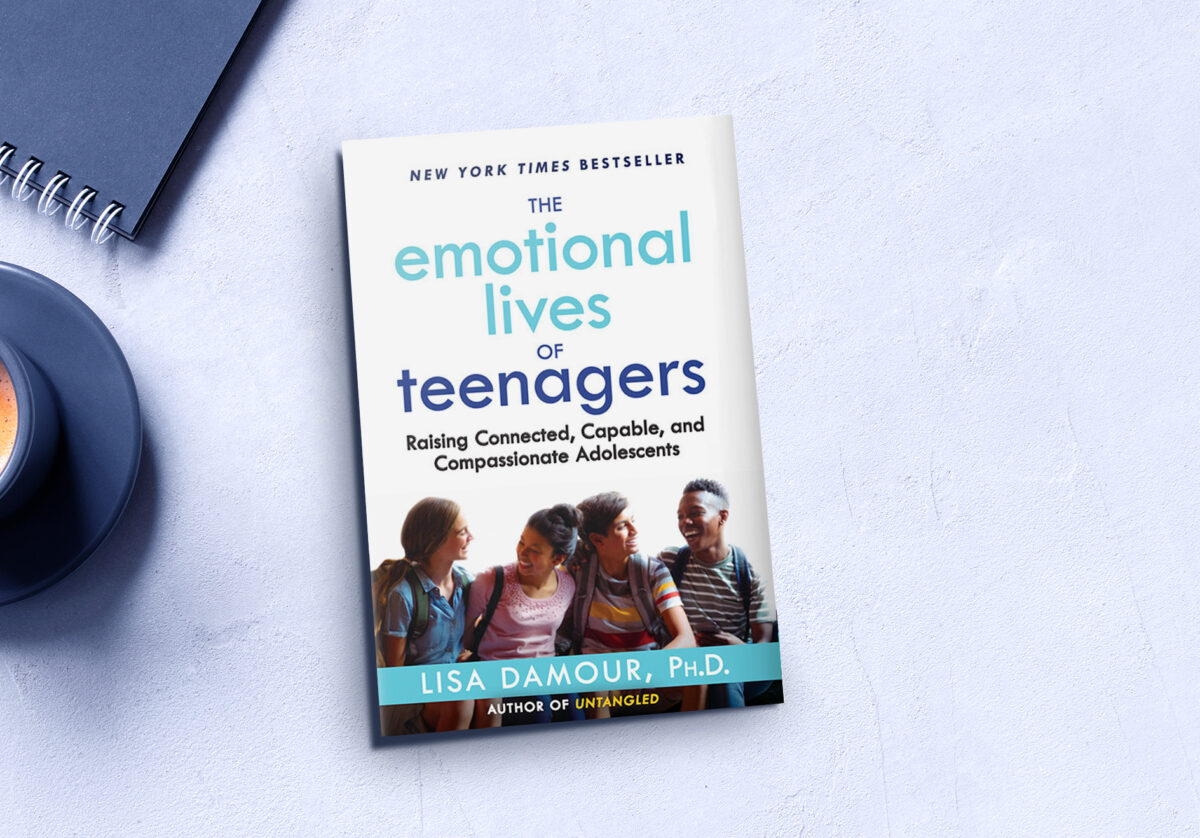
It is. It is. And I think that’s something we want to sit on for a minute or rest on for a minute. We also struggle with focus and attention. And what I think about all the time is I struggle sometimes to do my work. I adore my job. I am getting paid to do my job. I have chosen my job and I still have to give myself a timer and rewards. And one of the things I wrote about in The Emotional Lives of Teenagers, we should think of school being like a buffet where we require kids to eat every single thing on the buffet. When adults go to a buffet, they get like this thing they like and that thing they like with kids, we’re like, eat it all. So of course they’re going to have a hard time focusing sometimes because they’re taking it because they have to.
And I think some empathy in that direction helps a lot.
Reena Ninan:
So just acknowledging that they’re in a position where they don’t get a lot of choice throughout the day. So helping them-
Dr. Lisa Damour:
And they still have to do it.
Reena Ninan:
I want to go back to this. The student gets good grades. So when are we as parents being hyper worked up about something that we really shouldn’t have?
Dr. Lisa Damour:
Right. I mean, and this is the hard thing, right? There’s so much to worry about with kids and teenagers, especially if everything’s going well and they’re a good kid and they’re working hard and they’re getting stuff done and they’re actually really pleasant, right? You’re like, how much do I want to throw down about this? Especially when she’s getting good grades and she’s doing all the right things outside of school. How much do I want to throw down about this? I think every family has to make their own choices about it. I also, you have to decide what your priorities are as a family. Okay. So in my family, we’re nerds.
My husband has a PhD, I have a PhD, being able to focus on school and being able to do sustained work, that’s a real value in our family.That’s a high priority. So bluntly, Reena, in my house, I would throw down about this and I’ve actually had to. I mean, I’ve had to with my ninth grader because she’s a very capable student, but we’ve sometimes had to have conversations about where her tech is and it’s not hurting her schoolwork right now. So I do honor that though. Do you know that your kids are working in a focused way in their rooms? What do you know about how their homework’s going?
Reena Ninan:
Well, I think that’s the problem is I really appreciate because I grew up having a room of my own and I think that was really wonderful and helpful. And I can understand being around everyone all day and wanting some space. So I respect that, but you’re right, I have no idea. And sometimes the phone is up there and I’ll walk in and I’m like, “The phone’s not supposed to be here.” And she’d be like, “Look, mom, it’s on the shelf. It’s nowhere near me and I’m just playing music.” And that’s exactly what’s going on. And they’re good students. So why am I complicating it if they have figured this out on their own?
Dr. Lisa Damour:
It’s true. It’s true. And I’ll give you two more examples of where the phone’s not a problem that I’ve heard from teenagers. One is sometimes teenagers will open up their phone and have a friend on FaceTime who’s also doing their homework and just the company, right? The company of it. And then this cracks me up so much. And this is like the inventiveness in teenagers where this is a kid who used her phone to actually get it done. So I had this fantastic sophomore I knew who would put her video camera on and videotape herself studying for like 20 minute, 30 minute units. And something about having the monitoring of the video helped her lock in, as they say, kids say now lock in. And then she would amuse herself by going back and watching it on high speed because she would crack up at the faces she would make.
But I’m like, think it’s brilliant. She has used her phone to make herself lock in.
Reena Ninan:
Yeah. I guess I struggle with giving them enough space to figure it out on their own, but also knowing what we know and wanting them to develop good skills that’ll help them in college and work eventually down the road.
Dr. Lisa Damour:
This is something I’ve … Okay. I’ve been thinking about, like I said, behavior change at all in any human being. And then I’ve been thinking a lot about behavior change in teenagers. And so, okay, you know how I like, if I can, I like acronyms. All right. I’ve got another one for us. Okay.
Reena Ninan:
All right.
Dr. Lisa Damour:
I don’t even know if this is an acronym. It’s four Rs. All right. So this is my, I’m playing with this idea of like if you need to change behavior in a teenager, like if you feel like it’s a fight worth having as you’re asking, the first R, which we should use all the time everywhere, is Respect. You approach it in a respectful way. So rather than being like, “Ah, you and your computer and your phone and oh, and teens today and ah,” that kind of stuff. I think the thing we have to start with the assumption is that if we had had this technology as teenagers, we would use it exactly as our kids do it. Does that feel right to you?
Reena Ninan:
Oh yeah, I think you’re absolutely right, but I’ve never thought of it that way.
Dr. Lisa Damour:
Well, so I think we should think of it that way, right? That like the only difference between our kids and us is that we didn’t have it. And I think this makes for an interesting like friction around tech with kids because I think it’s easy to be like, “Oh, teens this and oh, teen’s that.” Well, on this one, it’s a pretty easy stick to beat them with because we can’t say, “Well, when I was a teenager, I did this with it,” we didn’t have it.
So I think to get to that respectful place, you start from this position of, okay, wait a minute, it was easy for us. We didn’t have this as an option and our kids do. And so of course they’re using it this way and we would’ve used it this way and yet it presents a problem, but the problem’s not the kid.
The problem is the environment in which they are currently growing up and what’s available to them. So I think if you can start with, is the kid the problem or is the tech the problem and what’s available? You quickly can see like it’s not the kid really and that fosters respect. Okay. So if you’re in the seat of the parent and you’re viewing it that way, like this is a world they’re growing up in, this is the tech that’s available. How would you, like in a respectful way, what would your approach then be if you see them doing what’s described in this letter? Do you have thoughts on that?
Reena Ninan:
I think it’s important to have a conversation because they push back saying, “Look, it’s only music and it just helps me study.” That’s always the default line. And if their grades are good, fine, but I think I’ve never had the conversation with them about how it might take them longer to be doing their homework than they may think because of the stuff.
Dr. Lisa Damour:
I think that’s it, right? And it’s exactly as you’re saying, like, look, I get it and you’re doing your music and you’re doing well. And I think actually even saying, “You’re doing well. I’m not saying this is a problem already,” but I think a respectful approach, and it gets to the second R, which is like a Rationale. You have to give a rationale for why you want the behavior to change. So you say, “Look, I didn’t have this tech as a teenager. I would’ve used it the same way you’re using it. ” Okay, so there you’ve checked the R box of respect. Then you say, “I want you to think differently or I want us to talk about whether or not it should be so present in your academic life because we have research showing that it’s going to slow you down. We have research showing that it’s going to cause more errors, that interrupting yourself is the same as when I interrupt you. And it’s super annoying to you when I interrupt you. It’s actually no different in your brain who interrupts you.”
So you offer this rationale, which then gets to the third R, which I think as adults we can still make, which is a Rule. I want a rule. This isn’t forever, but let’s try it for a month where your computer is either you don’t look at other sites or you make it so that you can’t look at other sites. And if your phone is there, it’s there as a timer to give you rewards. It’s not there as something you can shift to as soon as the work gets a little bit frustrating or a little bit boring. So I think I’m all for rules, right? You can make rules for kids and you should make rules for kids, but I think you first are respectful, you offer a rationale for the rule and then you give the rule. I think the final R is prepare for Resistance.
Do not be annoyed with your kid for rolling their eyes so that it’s one more R or themselves or being salty about it. No kid is going to be like, “Well, my goodness, now that you’ve explained this science.” That kid’s up to something if that happens.
I think I’ve shared this before, but if I haven’t, one of my favorite educators is this woman Candice Maiden, and she and I used to work together at a school where I consulted here in Cleveland. Whenever she had to enforce something with the students, she’d walk down the hall and their backpacks would be everywhere. She’d be like, put them away, put them away. And the kids would grumble and grumble and she’d walk down and she’d go, “Complain, but comply, complain, but comply.”
And I was like, okay, this woman understands teenagers perfectly. “I don’t need you to like it. I don’t need you to pretend like you like it. I just need you to do it.”
So I actually think where we often get hung up is that last R, which is like the kid does put their phone away, but they’re a grump about it and then we turn that into a whole thing. No, complain, but comply. So approach with respect, offer a rationale for why you want them to make a change, make a clear rule. Say, “We’re going to do this, this is the plan,” and then let them be mad at you. That’s where I’d start.
Reena Ninan:
That’s great. Respect, rationale, rule, resistance.
Respect rationale, rule resistance. That’s so good.
Listen, I am so glad we took this up. Sometimes we take up topics and I’m like, “Is this really a thing?” And then I start to think about my own parenting in my own home and I’m like, “Oh my gosh, I didn’t realize that we probably need to have a conversation about this as well.”
Dr. Lisa Damour:
I think we do. I think we do. I think it’s hard to be a kid today and I think we want to be teammates with them. And I think anything tech, the more you can position yourself as a teammate, the better it is.
Reena Ninan:
What do you have for us for Parenting to Go?
Dr. Lisa Damour:
Well, so I think the four Rs applies to almost all behavior change in teenagers. I think if you want them to stop leaving wet towels on their floor, I think you don’t have to bend over backwards with respect, but I don’t think you have … There’s no benefit, there’s no reason to ever be rude to a kid, but you can be like, “Hey, you and I both know that towel doesn’t really belong there. And here’s why I don’t like it there is that it actually smells bad and it’s moldy and I don’t want wet things hanging where they don’t really dry. So the rule is I’m going to ask you to put your towel on the rack and stop leaving it on the floor.” And then the kid rolls your eyes and you’re like, “I won. I got what I needed done.” I think that that’s the strategy.
That’s the strategy every time.
Maybe not every time, but anytime you can use the four Rs, they would be my recommendation.
Reena Ninan:
Respect, rationale, rule, resistance. Thank you for that. That is a great, tangible takeaway. I love it. I’ll see you next week.
Dr. Lisa Damour:
I’ll see you next week.
More resources