



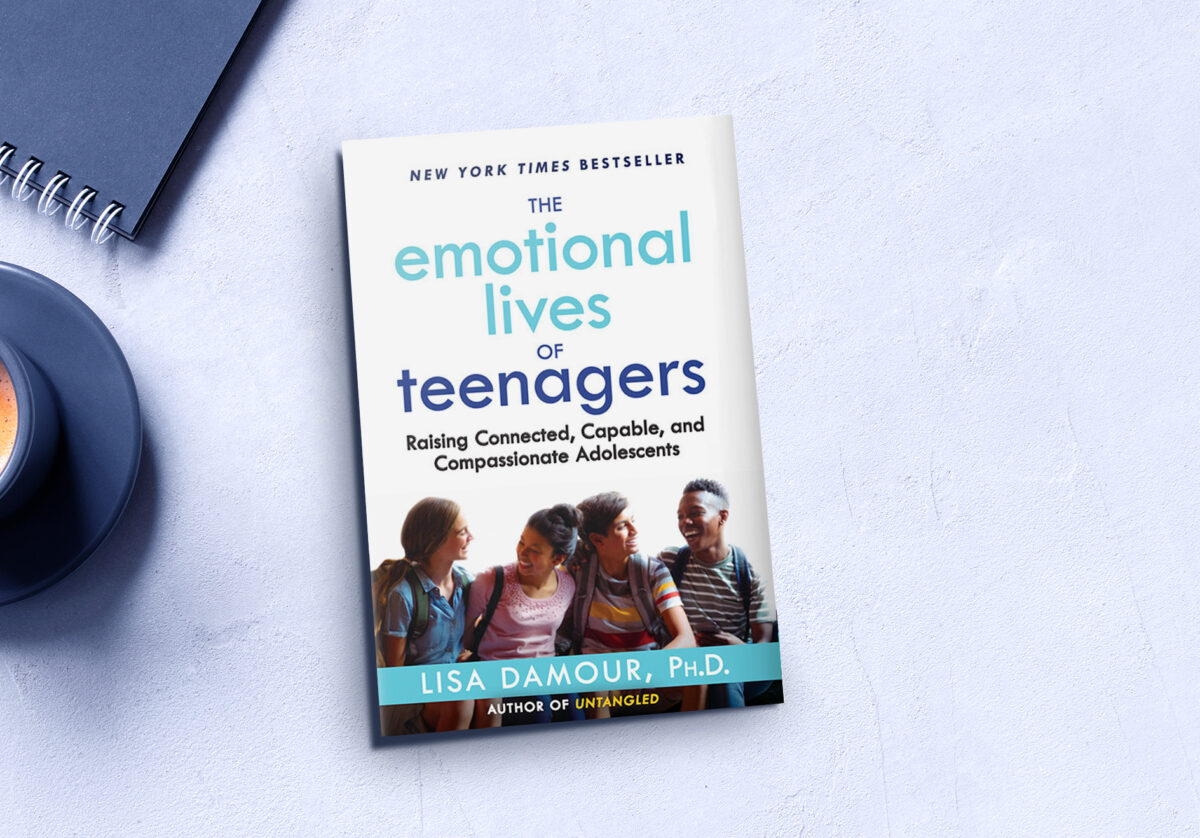



A concerned parent seeks Dr. Lisa’s guidance on building and maintaining a connection with her teenage son. Despite efforts to spend quality time together, most family activities are met with resistance. The parent wonders if it’s normal for her 15-year-old son and, more recently, her 11-year-old daughter, to hold their parents at a distance. Dr. Lisa and Reena explore the challenges of enforcing family time and suggest alternative approaches that can work. The episode answers several key questions, including: Is having dinner together sufficient to strengthen family bonds? How do parents foster connection during the turbulent teen years? And when it is time to worry about a teen’s reluctance to spend time with the family?
March 12, 2024 | 24 min
Transcript | How Do I Get My Teens to Want to Spend Time with Me?
The Ask Lisa Podcast does not constitute medical advice and is not a substitute for professional mental health advice, diagnosis or treatment. If you have concerns about your child’s well-being, consult a physician or mental health professional.
The following transcript has been automatically generated by an AI system and should be used for informational purposes only. We cannot guarantee the accuracy, completeness, or timeliness of the information provided.
Dr. Lisa Damour:
The job of teenagers is to become independent, to go from living with us, to being able to live on their own. So the way kids ready themselves for that kind of independence is they start to develop a psychological distance at home in advance of a physical distance. That’s to come.
Reena Ninan:
Episode 161. How Do I get my Teen to Want to Spend More Time With Me?
All right. Hearing back from a lot of parents about last week’s episode on birth control, boy, you know what still remains with me is the statistics you used in that episode.
Dr. Lisa Damour:
Yeah, we know a lot. I mean, we are tracking the data and we can use the data to make good decisions as families and we can also use them to inform policy, but I’m always so glad when we could just defer to the science. We don’t have to make it up where you don’t have to feel our way in the dark.
Reena Ninan:
Nope.
Dr. Lisa Damour:
We know things.
Reena Ninan:
Yeah, you’re always great with the science. I want to read you this letter because this is something, Lisa, that parents all struggle with. Many of them I think struggle with is wanting to savor every moment that your child has, but your kid is starting to pull away and not wanting to do it. Here’s the letter.
Hello, Dr. Lisa. I’ve been really enjoying your show. I know that in order to sustain a relationship during the bad times, you need to nurture it during the good times of your life. I’m having a difficult time getting any time allotted to spend with my 15-year-old son other than when I drive him to school, friend visits, or soccer. I want to put time in the bank that we can draw on later during discipline challenges, but he refuses to spend time with me or our family of four. We have family dinners daily and prior to the teen years, we spent most weekends enjoying nature together on hikes, nature center visits, bike rides, et cetera. Any of those activities only happen now if it’s a forced family outing. I still have an 11-year-old daughter and she too is starting to refuse time together. My husband and I both offer up movies at our house, in the theater, coffee shop visits, sport games, but these are also refused. After telling my son, I miss spending time with him and asking if there were 15 minutes in his day that we could set aside and hang out together. His answer was, well, “dinner.” Sadly, our dinners are about 15 minutes with the kids and then they rush off for some device time. How do you go about getting family time to strengthen or keep your bond when it only happens if your teens are forced against their will? Thanks so much.
Oh, forced against your will is not a great position to be in, Lisa.
Dr. Lisa Damour:
You are right, Reena. That is actually not going to work. It’s not going to work the way we want it to work though. I totally, totally deeply empathize with where this parent is coming from and Reena, you are walking right into this phase. One of the weird bitter ironies of it is, and this is my experience, they become so much more interesting. I’m obsessed with teenagers, it’s my whole life. And so one of the things that’s so hard is just when they’re becoming, at least in my view, wildly more interesting. They’re also like, “Do not hang out with me. Do not ask me so many questions.”
Reena Ninan:
Yeah. Yeah. But I’ve got to ask you, Lisa, is this normal for a 15-year-old?
Dr. Lisa Damour:
A hundred percent. A hundred percent. I just
Reena Ninan:
That makes me feel a little better.
Dr. Lisa Damour:
A hundred percent. I want you to hear, I want the letter writer to hear, I want everyone to hear this letter is as beautiful and accurate description of typical and expectable adolescent development as one could ever hope to hear. Right? The kid is pleasant, decent. They used to spend a whole lot of time together. Now the kid’s trying to get out of it and the kid’s like, lady, you got dinner. That’s what I got for you right now. So at 15, this kid is right on time.
Reena Ninan:
And by the way, can I say, I was just talking to a chef in town about this, that family dinners are just not a thing as they used to be when I was growing up. You just all had to sit down and eat. So kudos, they are getting dinner time together. But what do you make of this? I mean, is it also normal for the 11-year-old sister to be like, you know what, I’m not really into family time either.
Dr. Lisa Damour:
Actually, if he doesn’t have to be here, why do I have to be here?
A hundred percent normal for 11?. And I feel like Reena, if we ever took out “Ask Lisa podcast Billboards” on highways, I think one of them would be like, Hey everybody, adolescence begins around 10 or 11, not 13. Everybody thinks so. Yeah, 11. It is very typical. In fact, more expectable than not. The kids are going to be like, I don’t want to talk so much. I want to go in my room and close my door. I don’t want to answer so many questions. 11 is also right on time for kids pulling away becoming more private.
Reena Ninan:
How should the parents know when you should worry that your kid is isolated, doesn’t want to hang out with you? When is the moment to worry?
Dr. Lisa Damour:
When is it time to worry? Okay, so given that I’m saying yep, yep, yep. All of this is typical and I would worry if it’s not just that the kid is becoming remote from you. We fully expect that. And I actually want to think more about why. What I worry about is as they loosen ties to us, which is their job, they should be strengthening ties to other people. What we worry about is if they are loosening ties to everyone. So what we expect to see is that 11 and 15 year olds are getting into their friends, that spending time with their friends becomes more central in their agenda than spending time with their families and they also have more strong connections with adults outside the home.
And one of my favorite, very typical and perfect description of this kind of thing is where the parent goes for parent-teacher conferences and the teachers are like, “Your kid is terrific. She is a chatter box. Oh my God, he is so much fun. He tells us…” and the parent’s like, “Wait, my kid, are we talking about the same kid?” That is typical and healthy and expectable development in teenagers.
Reena Ninan:
My mother-in-law used to say, she always liked to do the carpool at this age because you don’t say a word and all this stuff comes out. And you know what? I’m at that age now where I’m doing the carpool and so the moms don’t realize, I’m like, yeah, I’ll take that carpool. Yeah, I’ll take that.
Dr. Lisa Damour:
Oh yeah.
Reena Ninan:
Because a window, they start to talk.
Dr. Lisa Damour:
They do. And if you keep your mouth shut, just be a good quiet chauffeur and they’re with their friends, you’ll hear everything. It is actually sort of amazing how unguarded kids get if the parent keeps their mouth closed or the caregiver does, do that. But it’s interesting Reena also in this letter, what I would say back to this parent is first of all, none of this is personal. And I think that’s, it can feel very personal. It feels personal. And in this letter you can feel the sense of I want this and he’s pushing me away, but I want, if I had to come up with a title for a book about parenting teenagers, it would be, “It’s Not Personal.” It’s not personal.
Reena Ninan:
Good one.
Dr. Lisa Damour:
It’s not personal.
But it feels personal. So invested in this kid and you like them so much. So number one, it’s not personal.
Number two, there are a lot of beautiful nooks and crannies in this letter of ways in which the kid is still with the parent, but the parent I think could give it more weight. So there’s the description of driving the boy to and from school and something’s mentioned about friend time, maybe when friends are over or soccer games, that’s time together. And a lot of what I think happens that goes wrong in these moments is that we as parents have our idea that time together is we chat intimately for 15 minutes, whereas for teenagers time together is we drive and you let me pick the music and we’re quiet together. Teenagers often really value that. And so what I would say to this parent is two things, it’s not personal and also put more weight on the togetherness. And I’m going to use finger quotes, togetherness of the times that don’t feel as connected to you as they actually may feel to your kid.
Reena Ninan:
Lisa, before I ask you about whether you can force the family time, why are they doing this? It does feel painful and personal even though you know it’s a part of life I guess, right?
Dr. Lisa Damour:
This is the key question. I think that when you can see why the kid has to do it, that does help with realizing how not personal this is. Okay, here is why Reena, and if you think about this, it’s kind of stunning.
The job of teenagers is to become independent, to go from living with us to being able to live on their own. There’s no real runway for this. They live under our roofs until, let’s say the kid goes to college, until we take them to college. It’s a very abrupt from being with us, cared for. We know everything about them to them being out on their own. It’s very abrupt.
So the way kids ready themselves for that kind of independence is they start to develop a psychological distance at home in advance of a physical distance that’s to come. And so if you think about it, Reena, if you’re supposed to become an independent person while your parent knows what you ate, where you are, you’re sleeping under the same roof. The only way you can really do that is to become more private, to want more time to yourself, to set up some distance. And that’s why it’s not personal. The kid’s getting ready to go and the only way they can get ready to go is if they sort of loosen ties, become more private. And what I’ll tell you is that
Reena Ninan:
Yes, sorry, I’m laughing. This reminds me of my girlfriend Preethi who her family is Indian and she was getting engaged and she wanted to make sure that her future husband proposed to her alone away from everybody else, not a big family engagement with a formal Hindu ceremony of some sort. She didn’t want any of that. And the dad exasperated goes, “I don’t understand what you do in private, you can do in public with us.” He was just dumbfounded that this joining of two Indian families together with the first stage would be done in secret as him getting down on one knee and surprising her.
Dr. Lisa Damour:
I mean this is exactly it. We come at it from totally different perspectives. The parent is like, “You’re still here. Let’s savor every moment. Why must you be so private?” And the kid’s like, “I’m trying to get ready to go. Could you please get out of my business?” And it’s the same moment viewed from two different perspectives. And this is what I love about our work is that there’s no bad guys in this story. Everybody’s doing the best they can, but everybody comes at it with a different need and we have to sort of lay out all the needs.
Reena, I have really good news, I have really good news. There’s an arc to this and this family is right at the beginning of that arc of kids needing to establish their privacy and their independence. Once they do that, they can often be quite a bit, quite a bit more close and forthcoming. So you know I have a daughter who is a sophomore in college when she was home over the winter break, we lost power for 36 hours.
Reena Ninan:
What?
Dr. Lisa Damour:
It was bad and it was so cold, Reena, it was so cold. By the time the power came back on, we could see our breath in the house. It was not good. The four of us had so much fun in those 36 hours and it’s because my 20-year-old having fully established her independence, she lives in another city, had no problem in that small interval being in front of the fire with us, we went over to my office, downloaded a movie, brought it back on a computer, watched a movie together as a family because she had established her independence. So the other thing I will say to parents in this is this is something that has to happen, but it’s a chapter in a long book of how you’re going to relate to your kids. You are in the, we need to be independent while living at home chapter. If you play it right, that chapter can be followed by a, I feel independent. And now we can be friends again chapter.
Reena Ninan:
So that could come potentially. So how do I lay that groundwork, Lisa of them? Okay, I get it. There’s going to be a moment where they’re not going to want to hang out. Their friends are going to be more important, but what do I do to lay that groundwork? So when they need something, they’re coming back that I think we talked about this in one season about putting money in the bank, banking this so that when it feels painful, I know that this might not be the end of how things are going to shape up.
Dr. Lisa Damour:
So what I will tell you, you may be surprised what my advice is, but I’m going to back it up. The way that you actually keep the communication channels open, even when you’re getting very little from the kid is do not hold a grudge. No grudge holding. And I will tell you this for me in some ways has been the hardest part of raising a teenager. And I’ll tell you what this looks like. What this looks like is you see your kid and you’re like, “Hey, how are you?” And they’re like, “…” right. And they sort of shut it down. They give you nothing or they give you a little bit of a, they ice you out, it hurts, it feels bad, it feels personal. You can nurse that. You can have this sense of why do they treat me like this and where do they go and why can’t they be better? And I do so many good things for them. I mean you can really go with it. 10 minutes later they’re like, “Hey,” and they want to talk about something or “Hey, can you take me over to do this?” If you are still nursing that grudge, you’re going to miss it out. You’re not going to be able to make that nice connection. So don’t let kids abuse you. Nobody gets to abuse anybody. You know how they say goldfish only have memories for what have happened in the last three seconds. There’s a place for that in parenting teenagers. The kid may have left you on an icy note. You may feel bad about it if the kid comes back to you and they’re acting normal or even kind, goldfish it three, you don’t remember what happened before. You just start where they are. I think where parents make an unforced error here is they’re still upset about the last interaction. And so when the kid is warmed up, they miss it.
Reena Ninan:
It’s hard to let go. It’s hard to be a goldfish.
Dr. Lisa Damour:
It’s hard to be a goldfish. It’s hard to be a goldfish.
Reena Ninan:
You’re a panther who’s about to leap at your young because
Dr. Lisa Damour:
An injured panther.
Reena Ninan:
Injured Panther is exactly right. The worst kind of panther. So can you force this time, Lisa, right? They’re 15. There’s maybe a couple more good years left before they’re fully out and flying out.
Dr. Lisa Damour:
I would say a little bit. I’d say a little bit, okay. Here’s what I would say. I think you can have expectations like dinner. I think dinner is a really important expectation to have. And we actually have research on this. We have research showing that families who have dinner more nights a week than not. So it doesn’t have to be every single night, like military style, everybody sitting at the table. It can be more nights a week than not. We do see improved outcomes for their teenagers, that their teenagers are safer and thrive more. So there is reason to say dinner’s a done deal. You got to come be with us. And this family’s already doing that. Now Reena what is tricky. And I remember going back to this research when my kids, my older daughter was in this phase. I was like, how can this be working, because like it’s so fast? They answer no questions.
Reena Ninan:
That’s right.
Dr. Lisa Damour:
It’s super unpleasant. How on earth can this possibly be conferring these good outcomes given the dinner is really not that fun? I mean scarf and move. So then I thought it through and I actually, I was like, okay, when we think about what makes a difference in family life for kids and outcomes, it’s two things. We’ve talked about this warmth and structure and saying dinner’s happening and you’re going to be there. I’m forcing dinner more nights a week than not is first of all, that is some structure, right? You are saying this is a routinized thing, we’re going to make time for it, we’re going to protect it. And it’s also a warmth, which is I don’t care if you are very, very quiet at dinner, I want to be with you anyway.
I want to be in your presence and we can sit and just eat quietly together. But I love you so much that I just want to lay eyes on you for 15 minutes. And so what I would say is that’s worth forcing, right? Because we have those reasons. You could then extend that. You could push your luck. You can be like, and also on two Fridays a month we will be having a family evening. You all get to pick the movie. You all get to pick the activity. But the fact that we’re having a family evening is a non-negotiable. Okay, warmth and structure, see how much you can get. But if it starts to feel like really unpleasant once you get past those basics, maybe look for ways in which the kids are making time available that you may not have savored as much as one had before.
Reena Ninan:
So don’t push it when you feel like you hit the gas pedal a little too much. Back away. Back away.
Dr. Lisa Damour:
Be cool. Be cool, right? Try to be cool, right? And I think it’s funny you talk about a panther, it’s making me think about we want to be in a state of readiness to connect when they want to connect, right? I’m thinking about a panther waiting for the prey that is the 15-year-old sort of quietly lurking in the bushes, which in my house would be quietly cleaning the kitchen. And if they come through and they’re like, oh my god, you’re not going to believe what happened at soccer practice. You’re like, talk to me. The panther is suddenly present.
Reena Ninan:
That’s exactly how I feel.
Dr. Lisa Damour:
But we have to allow for the fact that they are doing their job and their job involves pulling away while living at home. It’s not a forever thing. And go ahead and force dinner.
Reena Ninan:
Is there anything else, Lisa, you think the parents might want to keep in mind and try?
Dr. Lisa Damour:
I do wonder about what else the kids are into and what else the kids like, and I think what’s hard is sometimes they like stuff that as parents you’re just like, that’s so boring or so not interesting to me. Right? There were TV shows and movies that my kids will watch that I’m like, I really don’t want to watch this. But I have found that if I come in and I’m like, “Hey, can I watch?” They’re very happy to have you sit there as long as you do not say a word. And that’s together time. That’s together time. So I think again, opening up the possibilities for what being together looks like is something else that adults can do in these settings that makes a big difference to teens.
Reena Ninan:
You gave us some advice on the Wounded Panther parent. Is there anything else that you want parents to know? Because when you want that really badly with your child and you know that the time feels very limited, even though they’re going to be back when they leave, what’s your advice on sustaining yourself when it really is painful?
Dr. Lisa Damour:
Here’s what I will say, Reena. It’s imperative that anyone who is parenting teenagers has other sources of self-esteem and other people to talk to. If you go into raising a teenager and your sense of feeling like a good or connected person hinges on how your kid treats you, this is not going to go well.
Reena Ninan:
Probably, right.
Dr. Lisa Damour:
You really need, so I’ve had my work, I love my work. I have my colleagues, I love my colleagues. People have their friends, people have their work or volunteer or religious pursuits, whatever you got. But my number one piece of advice on this one is by the time you have a teenager, you’re going to need other aspects of your life that help you to feel good and connected. You cannot count on teenagers for this.
Reena Ninan:
Things to mull on that when the pain is so heavy. I felt that in this mom’s letter. I think about it all the time, even though we’re not fully in that stage, but you see them peeling away and the looks they give you of what you can and can’t say sometimes now.
Dr. Lisa Damour:
Yeah, it’s painful and it’s lonely. It’s lonely and it’s important to talk about that.
Reena Ninan:
Yeah.
Dr. Lisa Damour:
And I think it’s important for people to know that it’s not just their house. That this is what happens in other homes, even if it feels strange and unexpected in yours.
Reena Ninan:
Yeah, it’s the thing is parenting can feel so lonely and you don’t realize other people are experiencing the same thing, just not vocalizing it in the way you feel the pain.
Dr. Lisa Damour:
That’s exactly right. That’s exactly right.
Reena Ninan:
So what do you have for us, Lisa, for Parenting to Go?
Dr. Lisa Damour:
So Reena, I wrote Untangled for a reason. And the reason I wrote untangled is parenting teenagers does feel so personal. And so the structure of Untangled is seven tasks that teenagers have to work their way through.
Parting with childhood, finding a new pack, harnessing emotions, contending with adult authority, planning for the future, entering the romantic world and caring for themselves. And those are the chapter titles. And the goal in laying it out that way was to try to help parents see that adolescence was not something their kid was doing to them. Adolescence is a very, very demanding and complex time in development, and parents get pulled in ways they don’t see. They get pushed out in ways they don’t see, but if we can stand back and see that the kid is at work on a big project, it’s all easier to take.
Reena Ninan:
At work on a big project. That is sort of what they’re doing. You’re right.
Dr. Lisa Damour:
It’s what they’re doing.
Reena Ninan:
You’re absolutely right. Next week, Lisa, we’re going to have a slightly heavier topic. We’re going to talk about fentanyl and what parents need to know. I’ll see you next week.
Dr. Lisa Damour:
I’ll see you next week.
More resources